
Prevent a Frozen Pipe Catastrophe in Your Central Indiana Home
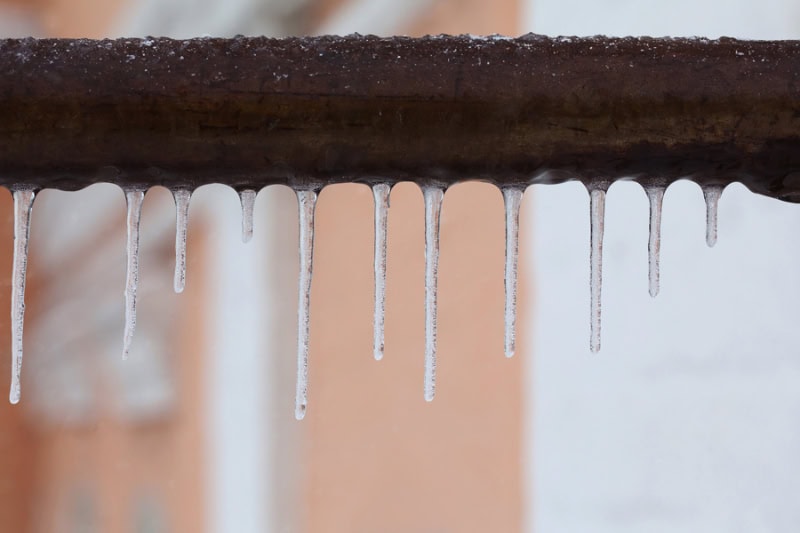
Indiana winters mean business. When temperatures stay below freezing or enter polar vortex levels, homeowners in Bloomington and surrounding communities face a costly emergency frozen pipes.
At Blue Fox Heating, Cooling, & Plumbing, we’ve seen the aftermath of freezes countless times and have answered many calls from homeowners searching “burst pipe repair near me.” We’ve dealt with frozen pipes in Bloomington and responded to middle-of-the-night emergencies in West Lafayette, knowing that a single burst pipe can cause significant damage to a home by releasing hundreds of gallons of water in under an hour.
Fortunately, you can prevent frozen or burst pipes and protect your floors, drywall, and valuables. To keep your home dry this winter, follow our guide to the three most important winter plumbing tips in Indiana.
This blog covers a key prevention task, the most critical step in the event of a pipe leak or burst, and how Blue Fox can help with both prevention and 24/7 emergency plumbing.
#1. How to Insulate Your Pipes to Prevent Freezing
If you have pipes running through unheated areas, they are particularly vulnerable. The Spruce, an online home improvement platform, notes that pipes technically can freeze at 32°F, but are more likely to freeze at 20°F. When water freezes, it expands. That expansion creates immense pressure that eventually causes the copper or PEX pipe to split.
You can make pipes less vulnerable by keeping them warm. If you take only one step to protect your plumbing this winter, be sure it includes insulating your pipes. Insulate pipes in the basement, crawl space, garage, attic, under sinks on exterior walls, and anywhere they run through unheated or poorly insulated spaces.
Here’s how:
What to Use to Insulate Pipes
You can find these effective, affordable options at most local hardware stores:
- Foam pipe insulation sleeves are easy to use and are ideal for DIY projects. They look like small pool noodles with a slit on one side.
- Fiberglass pipe wrap is best suited for high-heat areas and joints with irregular shapes.
- Self-sealing foam has an adhesive strip attached.
Step-by-Step Guide to Insulating Pipes
Follow these steps to insulate pipes like a pro:
- Identify vulnerable pipes.
- Wipe down the pipes.
- Measure the pipe length and diameter.
- With a utility knife, cut the foam sleeves to cut clean, straight sections.
- Open the slit and slide the foam over the pipe. Be sure it fits snugly.
- Duct tape the sleeve slit closed every 12 inches to keep it tight.
- For 90-degree turns, use pre-formed elbow sections or two pieces of foam at 45-degree angles, fitting them together like the corners of a picture frame.
Remember to insulate both hot and cold lines, and tape the ends of the foam closed to ensure no gaps exist. Use a plumbing spray sealant to fill and insulate the gaps around pipes where they enter the wall in your Bloomington, home.
#2. How to Find Your Water Shut-Off Valve
If a pipe leaks or bursts, every second counts. You can minimize water damage by turning off the main water valve and stopping the flow.
The main water shut-off valve location is where the water line enters the house. Check your basement wall facing the street, a utility closet near your water heater, or in your crawl space.
What a Water Shut-Off Valve Looks Like
There are two main types of valves:
A ball valve has a straight lever-style handle. If the lever is parallel to the pipe, the water is on. Shut it off by turning the lever 90 degrees, making it perpendicular to the pipe.
A gate valve looks like a round wheel, similar to a garden hose spigot. Turn it clockwise to turn the water off.
Tools You Might Need
You can turn most valves by hand. Older gate valves may be difficult to move. Use an adjustable wrench or pliers, along with some penetrating oil, to loosen stubborn handles. Apply gentle pressure on a stuck handle.
#3. Inspections and 24/7 Emergency Plumbing in Bloomington
Vulnerable pipes include those that are not visible inside an exterior wall or behind a bathroom cabinet. A licensed plumber can identify plumbing issues, including leaks between walls, and address minor issues before they escalate into major disasters. Our Blue Fox Plumbing Worx maintenance package provides an annual inspection and many additional benefits.
During a plumbing inspection, a Blue Fox plumber can check for:
- Pipes that are vulnerable to freezing
- Poor insulation or airflow problems
- Aging pipes and weak connections
- Old valves that might seize during an emergency
- Drafts near plumbing stacks.
Even with the best preparation, winter plumbing emergencies can still occur. When they do, our Blue Fox pros have your back. Our experts provide emergency plumbing services 24/7 throughout Central Indiana. We minimize water damage by responding quickly, repairing the leak, and helping you get your life back to normal.
Protect Your Plumbing Today!
Schedule a plumbing inspection with us at Blue Fox Heating, Cooling, & Plumbing and gain peace of mind knowing your pipes will withstand the next round of sub-zero temperatures. Whether you need help insulating pipes or finding the main shut-off valve in your Bloomington, home, we can help. Call us at 765-400-3978 or request service online.